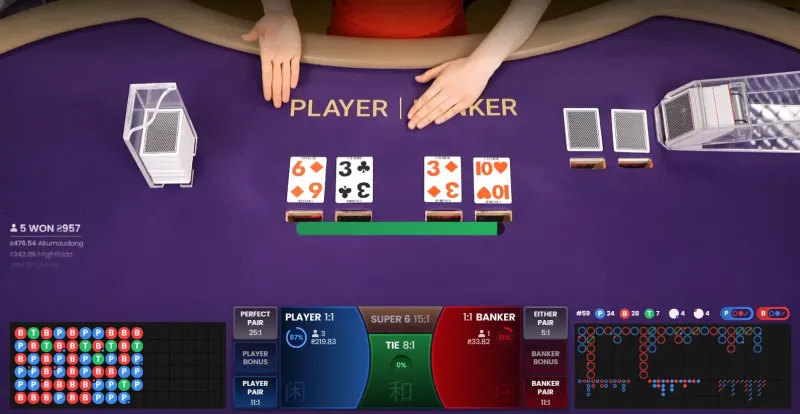
Momentum, Energy, and the Art of Knowing When to Strike at the Live Baccarat Table
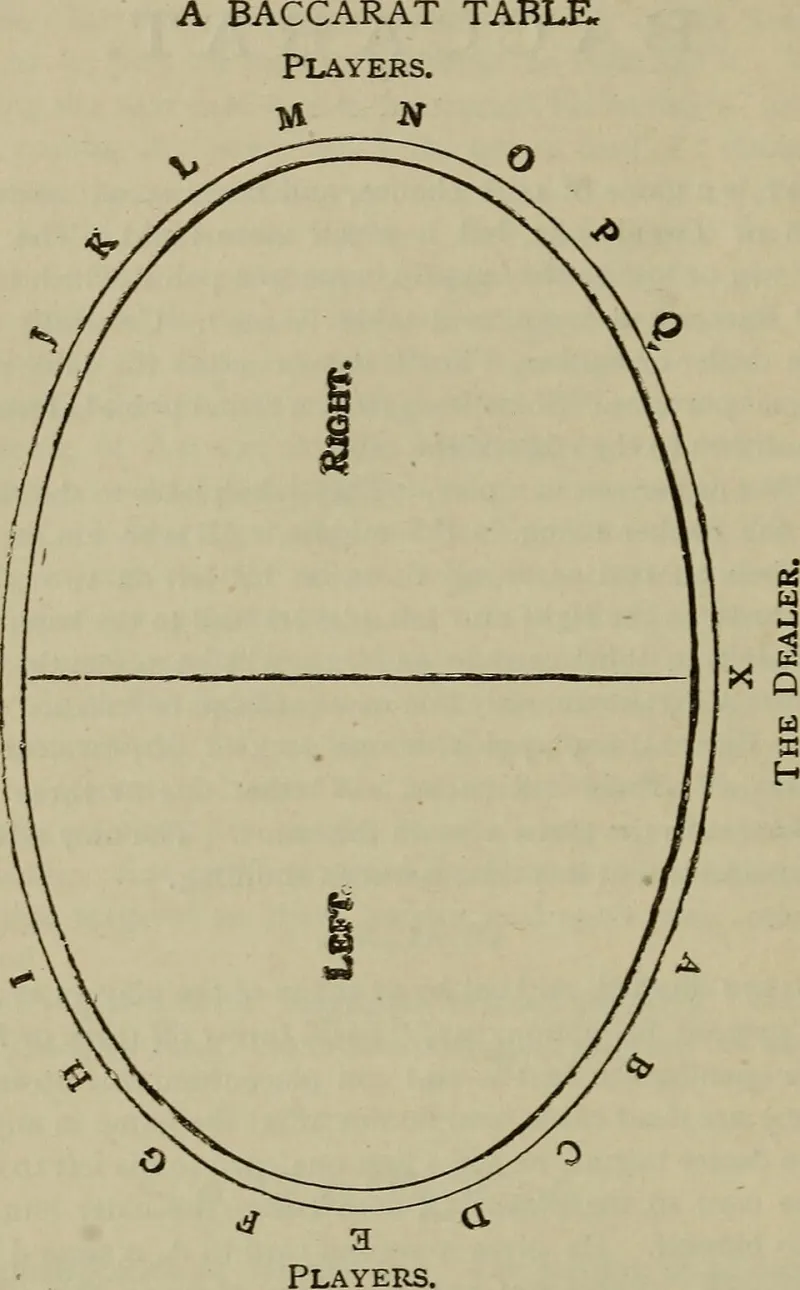
Photo: Internet Archive Book Images, No restrictions, via Wikimedia Commons
There is a particular kind of silence that falls over a live baccarat table when the momentum is about to shift. Experienced players recognize it. Casual ones miss it entirely. And that gap in awareness — subtle as it may seem — is precisely where strategic players find their edge.
At Baccarat 1688, we believe that informed play begins long before a chip hits the felt. It starts with observation, with patience, and with a genuine understanding of what is actually happening at the table in real time.
What Table Dynamics Actually Mean in Live Baccarat
The phrase "table dynamics" gets used loosely in casino conversation, but it carries specific meaning for baccarat players who approach the game with intention. At its core, table dynamics refers to the observable rhythm of outcomes, the consistency of dealer behavior, and the collective energy of everyone participating in a given session.
In live baccarat — whether played in a brick-and-mortar casino in Las Vegas or through a live-dealer streaming platform — these dynamics are constantly in motion. Outcomes do not occur in a vacuum. They unfold within a context shaped by shoe composition, dealing pace, and the psychological state of the players at the table.
None of this implies that baccarat outcomes are predictable in a strict mathematical sense. The house edge is fixed, and no pattern of observation changes the underlying probabilities of any given hand. What table dynamics do offer, however, is a framework for managing your own behavior — specifically, when to increase exposure and when to exercise restraint.
Recognizing a Run and Knowing Its Limits
One of the most discussed — and most misunderstood — concepts in baccarat strategy is the streak, or what players often call a "run." When Banker or Player outcomes repeat consecutively, it creates a visible pattern on the scoreboard. Seasoned players watch these patterns not because they believe the cards "know" what happened before, but because streaks reveal something about the current shoe's composition and the natural clustering of outcomes.
The practical takeaway is disciplined, not mystical. When a run is in progress, many strategic players will press their wager modestly — not dramatically — to capitalize on continuation. When a run breaks, they return to a baseline bet and reassess. The key word here is modestly. The instinct to double or triple your stake during a streak is precisely the impulse that erodes bankrolls over time.
Consider a scenario familiar to regular players: Banker has won seven consecutive hands. The temptation is to ride the streak aggressively. The disciplined response is to continue betting Banker — since the statistical edge on Banker remains consistent — but to avoid inflating wagers beyond your predetermined unit structure. The streak may continue, or it may end on the very next hand. Your bet sizing should reflect that uncertainty, not deny it.
The Dealer's Role: Consistency, Pace, and Subtle Signals
In live baccarat, the dealer is not a passive figure. Their pace, their card-handling consistency, and even the rhythm of their shuffles can influence the energy of a session in ways that attentive players notice.
A dealer who maintains a steady, unhurried pace tends to produce a session with clear, readable scoreboard patterns. A dealer who rushes — or who varies the dealing cadence irregularly — can disrupt a player's ability to maintain focus and rhythm. This is not about superstition. It is about cognitive load. When the environment is consistent, players make better decisions. When it is erratic, decision-making quality tends to decline.
Experienced baccarat players often note when a dealer rotation occurs — a standard practice in most casinos every 30 to 40 minutes. A new dealer brings a new energy to the table, and many players treat this as a natural reset point: a moment to reassess their position, review their session results, and decide whether to continue or step away.
This is not reading a "tell" in the poker sense. Baccarat dealers do not influence outcomes through their technique. What players are actually doing is using the dealer rotation as a psychological anchor — a built-in pause that encourages reflection rather than reactive betting.
When to Press and When to Pull Back
The most critical skill in live baccarat is not knowing how to bet — it is knowing when. This requires a two-part assessment: an honest read of current table conditions and an honest read of your own mental state.
Table conditions that warrant measured aggression include: a clear streak in progress, a scoreboard showing minimal chops (alternating outcomes), and a personal session that is running modestly positive. In these circumstances, increasing your bet by one or two units above your base is a reasonable strategic adjustment.
Conversely, table conditions that call for restraint include: a choppy scoreboard with no discernible pattern, a session that has already absorbed several losing streaks, or a personal mental state that has shifted from calm analysis to emotional reaction. The moment you find yourself chasing losses or betting against your strategy because of frustration, the correct move is to reduce your wager to its minimum — or to leave the table entirely.
At Baccarat 1688, we emphasize this point consistently: the ability to step away is not weakness. It is the most sophisticated skill a baccarat player can develop.
Translating Observation into a Repeatable Framework
Here is a practical structure that experienced players use to integrate table dynamics into their sessions:
Before sitting down: Review the current scoreboard if one is visible. Note whether the shoe is showing streaks, chops, or mixed patterns. Decide on your base unit and your session stop-loss before placing a single chip.
During play: Track outcomes in real time. Use the scoreboard as a data source, not a crystal ball. Adjust bet sizing within a defined range — for example, between one and three units — based on whether a run is active or a chop pattern has emerged.
At natural breaks: Dealer rotations, shoe changes, and personal comfort breaks are all opportunities to reassess. Treat them as such. A brief pause to check your session balance and emotional state is a strategic act, not a distraction.
On exit: Define your win target and loss limit before the session begins, and honor them. The player who leaves the table with discipline intact — regardless of outcome — is the player who returns with a viable strategy next time.
Live baccarat rewards composure above all else. The players who consistently perform well are not those who read the table most cleverly — they are those who manage themselves most honestly. That is the real dynamic worth mastering.