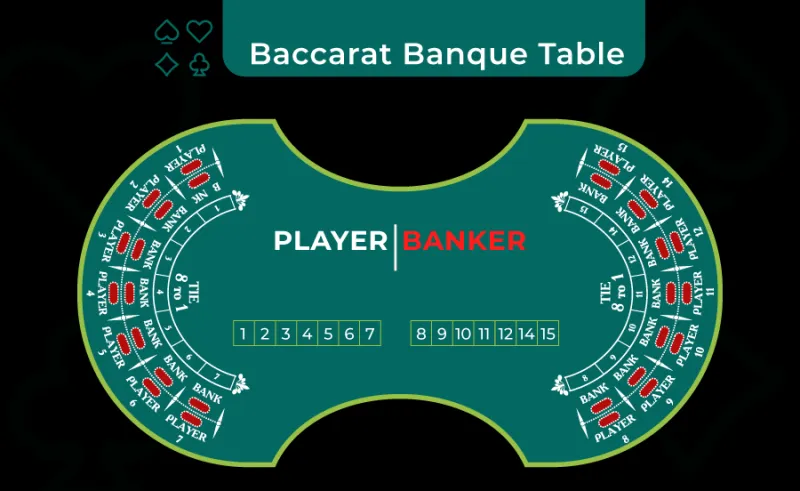
Proof of Concept: The Rigorous Framework Serious Baccarat Players Use to Validate a System Before It Costs Them a Dollar
Photo: USEPA Environmental-Protection-Agency, Public domain, via Wikimedia Commons
The Expensive Shortcut Most Players Take
There is a pattern that repeats itself with remarkable consistency among baccarat players at every level of experience. A player encounters a new betting system — perhaps a progressive staking model, a pattern-based wagering sequence, or a hybrid approach combining flat betting with selective escalation. They test it informally over a weekend session. The results are encouraging. They deploy it with real money the following week. Within a month, the system has either failed to replicate its initial performance or produced losses that feel inexplicable given how convincingly it appeared to work at the outset.
The problem is not the system itself, at least not necessarily. The problem is the validation methodology — or, more accurately, the absence of one. A weekend of live play is not a test. It is an anecdote. And anecdotes, however compelling they feel in the moment, are statistically worthless as evidence of genuine edge.
At Baccarat 1688, we hold to a foundational principle: your bankroll deserves the same rigor you would apply to any significant financial decision. The framework described here is designed to provide exactly that rigor.
Step One: Define the System With Surgical Precision
Before any testing can occur, the system under evaluation must be documented with complete specificity. Ambiguity is the enemy of valid testing because it allows unconscious rationalization to influence results.
A properly defined baccarat system specifies every decision rule without exception:
- Which bet is placed on each hand (Banker, Player, or Tie — and under what conditions each is selected)
- The exact staking formula for every scenario, including after wins, after losses, and after pushes
- The session entry criteria — when does play begin?
- The session exit criteria — when does play stop, regardless of outcome?
- The maximum bet ceiling and the minimum bet floor
- How the system handles edge cases such as consecutive ties or extended Banker streaks
If you cannot write these rules in a format that someone else could follow without asking a single clarifying question, the system is not yet ready to test. Vague systems produce vague results, and vague results tell you nothing actionable.
Step Two: Establish Your Sample Size Standard Before You Begin
One of the most common statistical traps in system validation is evaluating results before a meaningful sample has accumulated. The human brain is pattern-seeking by design, and it will manufacture significance from noise if given the opportunity.
For baccarat, where individual hand outcomes are binary and the house edge is relatively thin, a credible minimum sample for preliminary backtesting is 10,000 hands. This figure is not arbitrary. At smaller sample sizes, variance can sustain virtually any system — including a completely random one — in apparent profitability for extended stretches. At 10,000 hands, the signal begins to separate meaningfully from the noise.
For systems involving variable staking — where bet sizes escalate or de-escalate based on recent outcomes — the minimum sample should extend to 25,000 hands or more, because the interaction between staking patterns and outcome sequences introduces additional variance that requires a larger dataset to evaluate properly.
Establish this standard before you begin testing, and commit to it unconditionally. Stopping the evaluation early because the results look favorable is precisely the kind of confirmation bias that produces false confidence.
Step Three: Construct the Simulation Environment
There are two primary methods for backtesting a baccarat system: manual record-keeping using historical hand data, and computational simulation using software tools.
For most American players, computational simulation is the more practical approach. Spreadsheet software such as Microsoft Excel or Google Sheets can be configured to generate baccarat hand outcomes using statistically accurate probability distributions — approximately 45.86 percent Banker wins, 44.62 percent Player wins, and 9.52 percent ties, per standard eight-deck shoe parameters. Free and low-cost baccarat simulators are also available through several online gaming communities and can run thousands of hands in seconds.
Whatever environment you use, the simulation must reflect the actual conditions under which you intend to play. If you plan to play at tables with a five percent Banker commission, your simulation must incorporate that commission on every Banker win. If you plan to play commission-free tables that push on a Banker total of six, your simulation must model that rule variant accurately. A system validated under incorrect assumptions is not validated at all.
The Metrics That Actually Matter
Once the simulation is running, most players make the mistake of fixating on a single number: total profit or loss. This is insufficient. A comprehensive evaluation tracks at minimum the following metrics:
Return on Investment (ROI): Total net profit divided by total amount wagered. A system that generates $500 in profit on $50,000 in action has a 1.0 percent ROI — which, given baccarat's house edge, is actually a result worth examining carefully.
Maximum Drawdown: The largest peak-to-trough decline in the running bankroll across the entire simulation. This figure reveals the worst-case capital destruction the system can produce and is essential for determining appropriate bankroll sizing. A system with a maximum drawdown of 40 units requires a bankroll capable of absorbing that loss without forcing the player off the table.
Win Rate by Condition: Break down results by the specific conditions that trigger each bet type. If your system bets Player after three consecutive Banker wins, what is the win rate specifically in those situations? If it matches the baseline Player win rate of roughly 44.62 percent, the trigger condition provides no predictive value whatsoever.
Streak Analysis: Document the longest losing streaks encountered across the simulation. This is particularly critical for progressive staking systems, where a prolonged losing sequence can trigger bet sizes that exceed table maximums or exhaust the entire bankroll before a recovery is possible.
Consistency Across Shoes: Divide the 10,000-hand simulation into individual shoe segments and evaluate performance within each shoe separately. A system that performs well in aggregate but shows extreme variance across individual shoes is a system that will feel unreliable in practice — and unreliable systems invite the kind of mid-session decision-making that unravels even sound strategies.
Distinguishing a Lucky Streak From Genuine Edge
This is the most psychologically demanding step in the entire validation process, because it requires a player to potentially discard a system that produced positive results.
The statistical test to apply is straightforward in concept: compare the system's results against what would be expected from a purely random betting strategy over the same number of hands. If a random strategy — alternating bets with no logic whatsoever — would have produced similar results in a meaningful percentage of simulated runs, then the system's results are within the range of normal variance and provide no evidence of genuine edge.
A system demonstrates credible evidence of edge only when its results fall outside the confidence interval of what random chance would produce. In practical terms, this means the system must outperform a flat Banker-bet baseline — the lowest house edge available in standard baccarat — by a statistically significant margin across the full sample. If it does not clear this bar, the system is not adding value; it is only adding complexity.
The Live Pilot: From Simulation to Real Tables
A system that survives rigorous simulation testing has earned the right to a controlled live pilot — not an unrestricted deployment, but a structured trial with predetermined parameters.
Set a fixed number of live sessions for the pilot: a minimum of 20 sessions is recommended, each played under identical conditions. Track every metric from the simulation phase in real time. Compare live results against the simulation's predicted distributions. Significant deviations — in either direction — warrant investigation before further commitment of capital.
This disciplined transition from simulation to live play is where serious baccarat players separate themselves from the field. The simulation does not guarantee results; variance is permanent and inescapable. What the simulation provides is a calibrated expectation — a benchmark against which real performance can be honestly measured.
The Standard Worth Holding
No system passes every test. Most do not pass any of them, and that is valuable information. A system that fails rigorous validation before you risk a dollar has saved you exactly the amount you would have lost deploying it prematurely.
The players who build lasting results at the baccarat table are not those with the cleverest systems. They are the ones disciplined enough to demand proof before they bet. Hold every strategy you encounter to that standard, and your bankroll will reflect the difference.